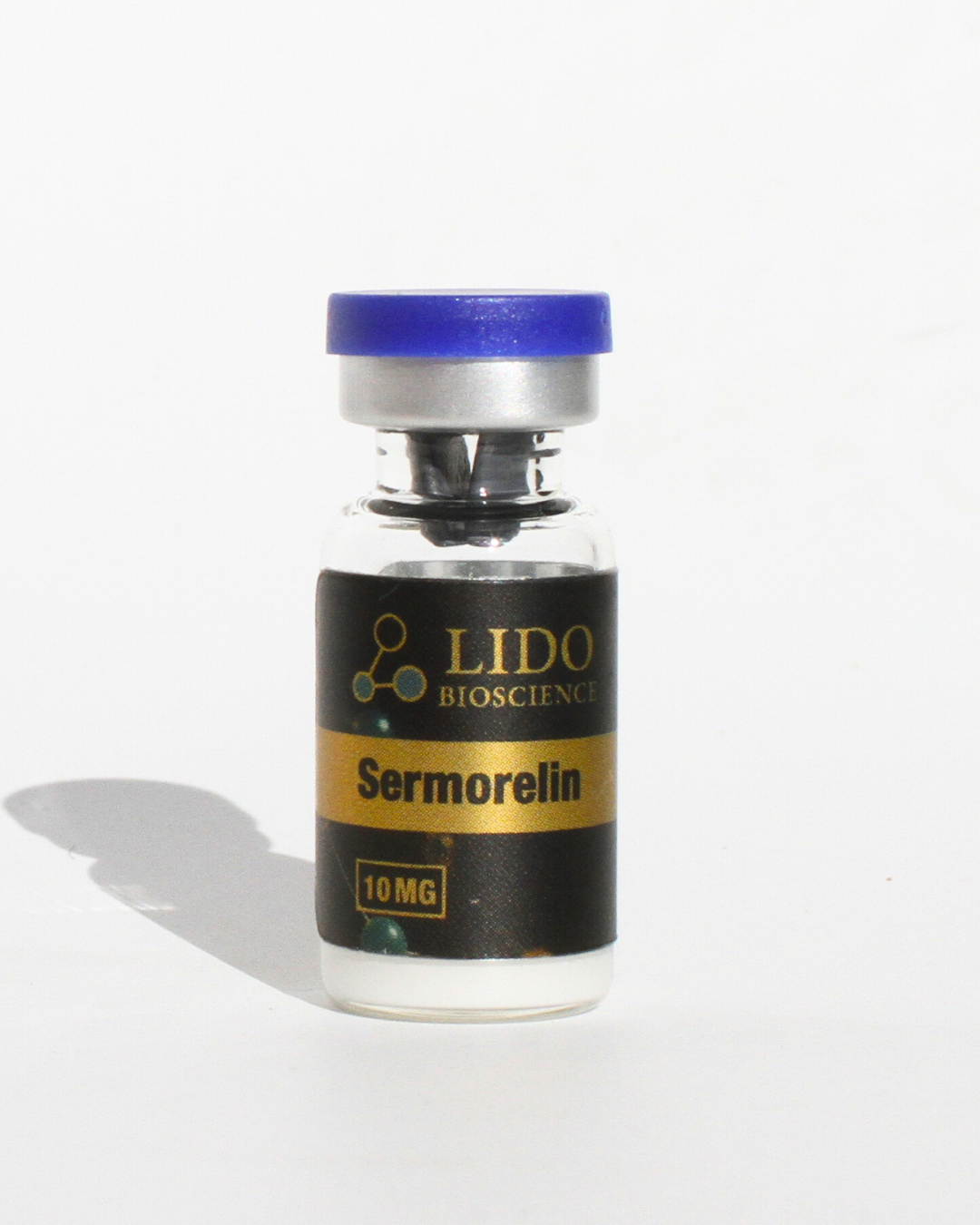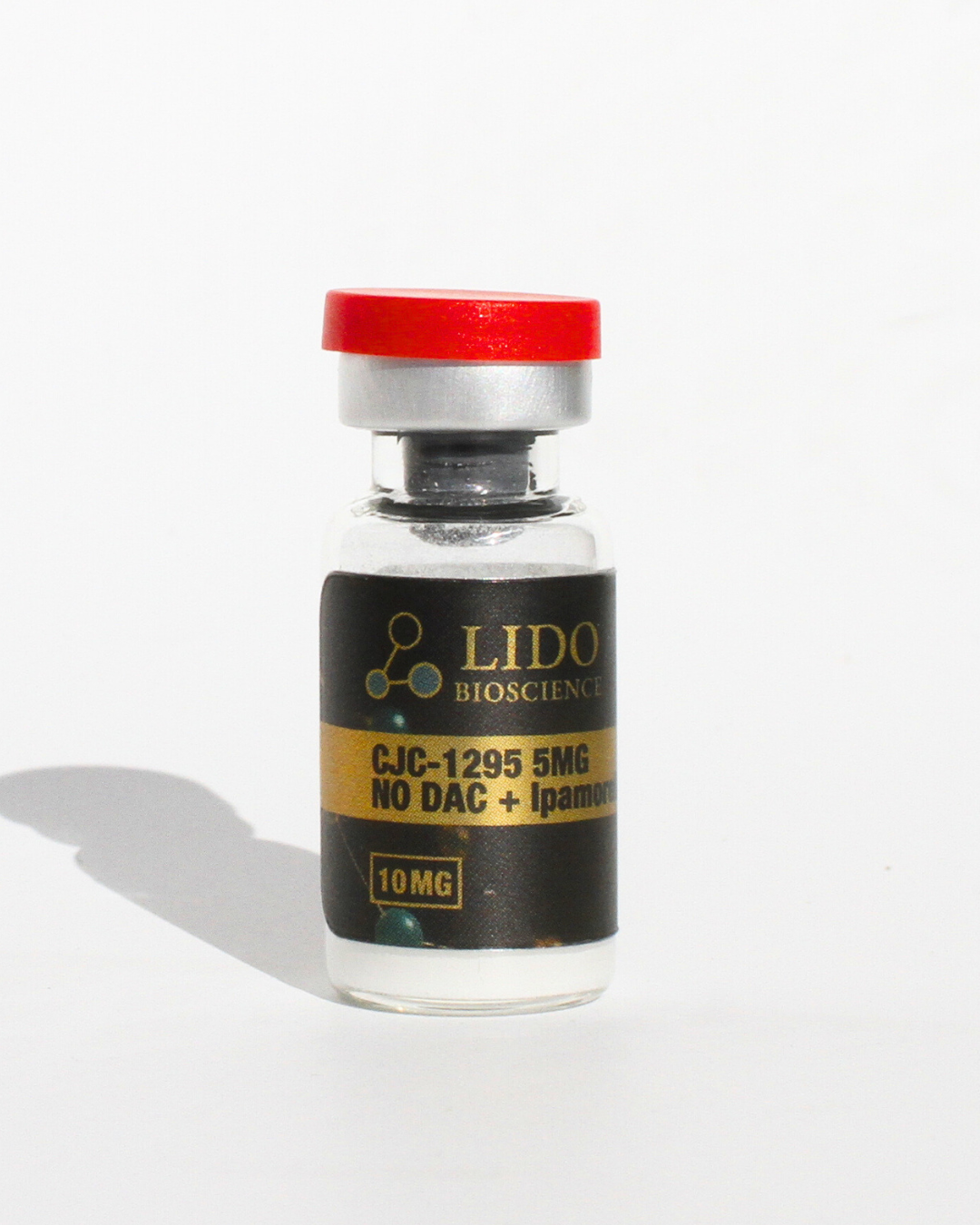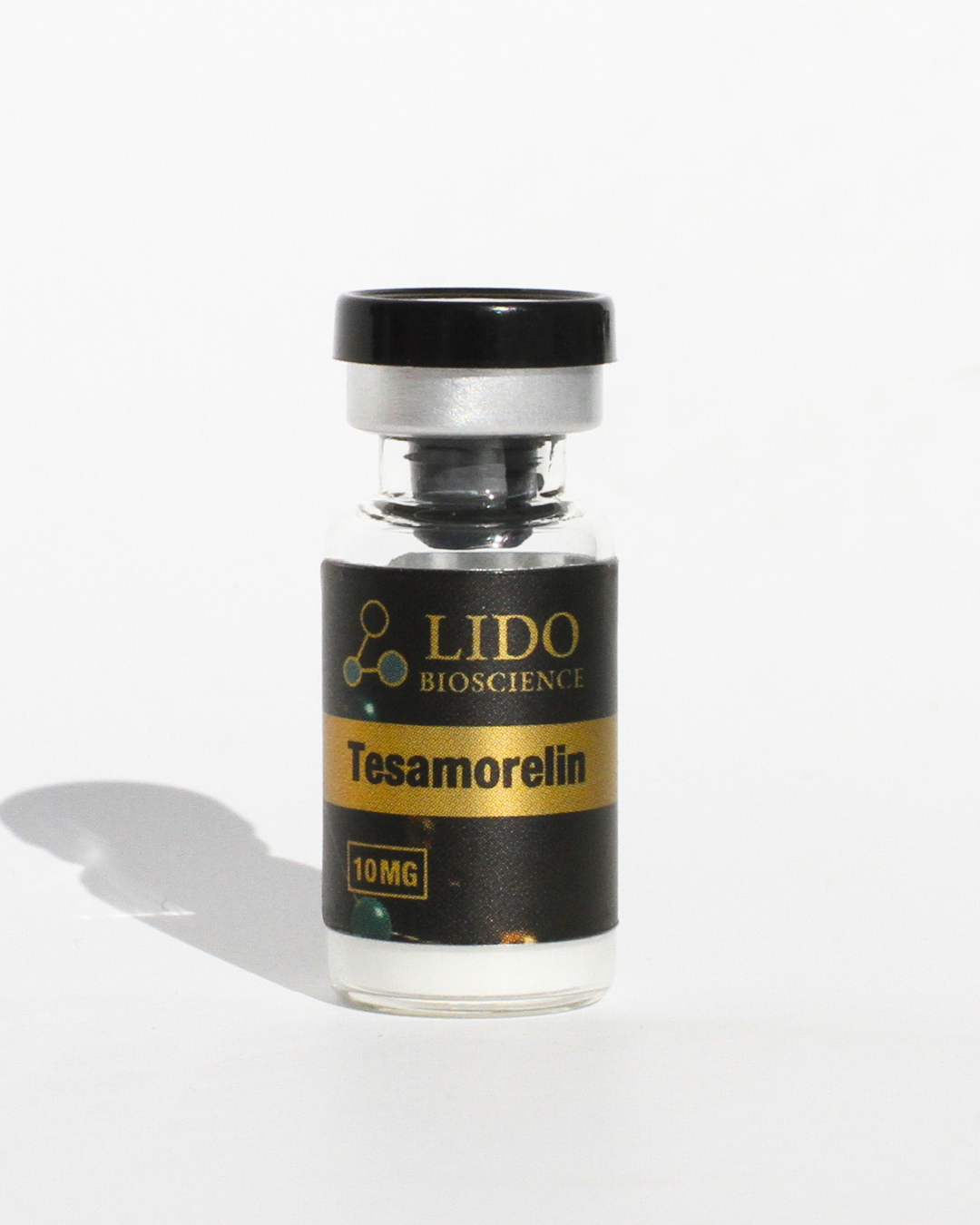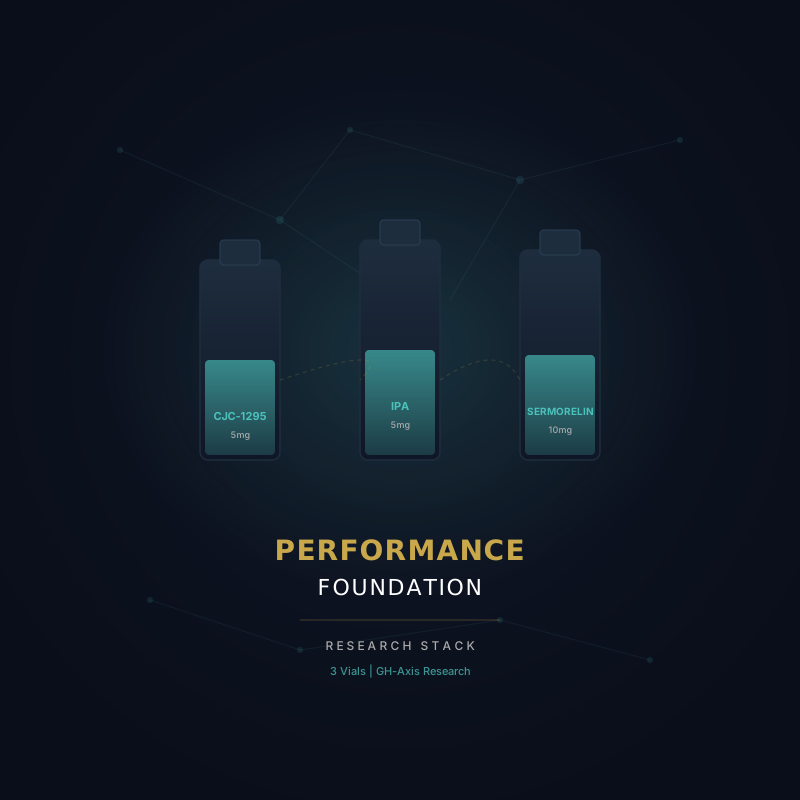
Sermorelin and the CJC-1295 + ipamorelin combination are both used in growth-hormone-axis research, but they take different routes to the same downstream signal. The comparison comes down to whether you want to amplify one part of the GH-release cascade or two parts simultaneously.
This article walks through both approaches, the mechanism behind each, and how researchers choose between them.
Sermorelin: GHRH receptor only
Sermorelin is a synthetic version of the first 29 amino acids of growth-hormone-releasing hormone, or GHRH. The 1-29 fragment retains the GHRH receptor activity of the full 44-amino-acid parent molecule and is easier to manufacture.
The mechanism is single-target. Sermorelin binds the GHRH receptor on the anterior pituitary and signals it to release growth hormone. The pulse amplitude is determined by the pituitary's natural responsiveness to GHRH at that moment, which preserves the pulsatile rhythm and the feedback loops that regulate the axis.
Half-life is short, around 10 to 12 minutes, because sermorelin is rapidly degraded by the enzyme DPP-4. Most research protocols use once-daily dosing at night to align with the natural peak in GH release during deep sleep.
CJC-1295 + ipamorelin: two receptors at once
The combination targets two receptors simultaneously. CJC-1295 (without DAC) is a longer-acting GHRH analog with a half-life of one to two hours, several times longer than sermorelin. The structural changes that extend the half-life are at positions that resist DPP-4 cleavage.
Ipamorelin is a separate molecule that targets the growth-hormone secretagogue receptor, or GHS-R. The GHS-R is the receptor for ghrelin, the "hunger hormone," but it is also a strong amplifier of GH release. Ipamorelin is selective for the GHS-R and does not significantly activate the cortisol, prolactin, or appetite-control pathways that earlier secretagogues affected.
When the two are dosed together, the GHRH receptor and the GHS-R are both activated simultaneously. The combined signal produces a larger GH pulse than either alone in published research.
The clinical signal: pulse amplitude
The most-cited difference between the two approaches is the size of the GH pulse. Sermorelin produces a clean but moderate-amplitude pulse. CJC-1295 + ipamorelin produces a larger pulse because two independent signals converge on the pituitary at once.
In practice, this means the CJC-1295 + ipamorelin combination is more likely to push GH release above the threshold where downstream IGF-1 production responds. For research questions where the IGF-1 signal is what you are trying to read, the combination is the higher-leverage choice.
Cost, complexity, and dosing
Sermorelin is one vial, one injection, once daily. Simpler to use, less to track.
CJC-1295 + ipamorelin is typically supplied as a single combined vial (5 mg of each, in the Lido BioScience catalog) but requires more attention to reconstitution math because the two peptides have different effective doses. Most research protocols also dose this combination three times daily rather than once, to align with the pulse intervals of natural GH release.
For researchers new to the GH axis, sermorelin is often the simpler starting point. For more advanced protocols or where pulse amplitude is the variable of interest, the combination is more flexible.
Where tesamorelin fits
Tesamorelin, sometimes labeled TH9507, sits between the two. It is a single GHRH analog like sermorelin, but the structural modifications resist DPP-4 cleavage and produce a longer half-life and higher receptor potency. The pulse amplitude is closer to what CJC-1295 + ipamorelin produces, with the simplicity of a single molecule.
Tesamorelin also has the cleanest regulatory record in the GH-axis class because it is FDA-approved for a specific clinical indication (visceral fat reduction in HIV-associated lipodystrophy). The research literature on tesamorelin is correspondingly deeper than on sermorelin in non-approved contexts.
How to choose
For an introductory GH-axis research protocol with single-daily dosing: sermorelin.
For a more advanced protocol where pulse amplitude is the variable of interest: CJC-1295 + ipamorelin.
For research that needs the cleanest regulatory framing and a single molecule: tesamorelin.
For research that uses GH-axis amplification alongside other interventions: any of the three, depending on the dosing schedule of the rest of the protocol.
A note on framing
All three compounds are sold by Lido BioScience as research peptides. Pregnancy, active cancer, and pituitary disorders are contraindications across the GH-axis class. Any clinical use should be guided by a physician.