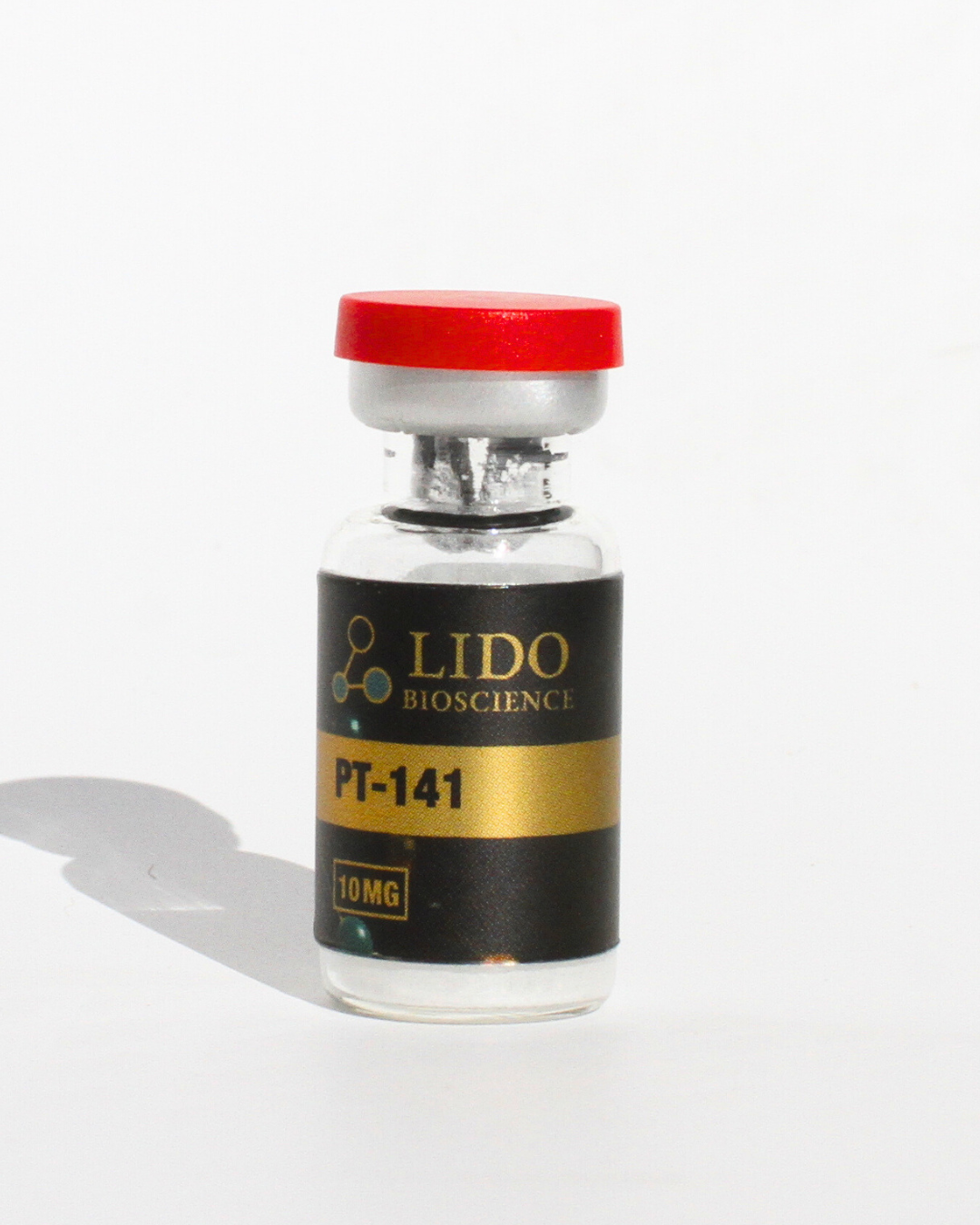
PT-141, also known by the development name bremelanotide, is a synthetic peptide that activates melanocortin receptors. The molecule was originally developed from research on melanocyte-stimulating hormone, but its current research interest is in central-nervous-system effects on sexual response rather than skin pigmentation.
This guide walks through the receptor system, the mechanism, and where the published data sits.
The melanocortin receptor family
Melanocortin receptors are a family of five G-protein-coupled receptors, labeled MC1R through MC5R. Each subtype lives on different tissues and serves a different function: MC1R on melanocytes regulates pigmentation, MC2R on the adrenal cortex regulates stress hormone release, MC3R and MC4R in the central nervous system are involved in appetite and sexual response, and MC5R is less well-characterized.
PT-141 is a non-selective melanocortin receptor agonist with a preference for MC3R and MC4R. The molecule was developed from alpha-MSH, the natural ligand for MC1R, but the structural modifications shift the binding profile toward the central receptors and away from skin pigmentation.
Mechanism: centrally acting, not vascular
Most pharmacology for sexual response works on the vasculature. PDE5 inhibitors, for example, increase blood flow by amplifying nitric-oxide signaling in the endothelium. PT-141 is different: the mechanism appears to be entirely central. The peptide crosses the blood-brain barrier and activates melanocortin receptors in the hypothalamus and brainstem, where the signal triggers downstream pathways involved in sexual arousal.
The mechanistic distinction matters because the central pathway is upstream of the vascular response. In animal models, PT-141 produces arousal responses even when peripheral nitric-oxide signaling is blocked, which is the kind of dissociation that supports a true central mechanism.
The published data
PT-141 has been studied in male and female sexual response. The approved indication for the molecule, marketed under the trade name Vyleesi, is acquired generalized hypoactive sexual desire disorder in premenopausal women. The approval was based on phase-3 trials showing statistically significant improvements on validated sexual-response inventories at the approved dose.
Research in male sexual response has also been published, with the most-cited papers covering erectile dysfunction that did not respond to PDE5 inhibitors. The central mechanism appears to produce responses in some subjects where vasoactive approaches failed.
Adverse-event profile
The most-cited side effect is nausea, which is dose-related and tends to attenuate with repeated dosing. Flushing, headache, and modest transient increases in blood pressure are also documented in the clinical literature.
The blood-pressure effect is the reason the FDA labeling for the approved form contraindicates use in subjects with uncontrolled hypertension or known cardiovascular disease. Researchers studying the molecule should be aware of the cardiovascular profile.
A note on framing
PT-141 is sold by Lido BioScience as a research peptide. An approved form of the molecule exists for a specific indication, but the research peptide is not the same product as the approved formulation and is not for human therapeutic use in this context.
Cardiovascular disease, uncontrolled hypertension, and pregnancy are contraindications. If you are evaluating PT-141 for any clinical situation, talk to a physician.