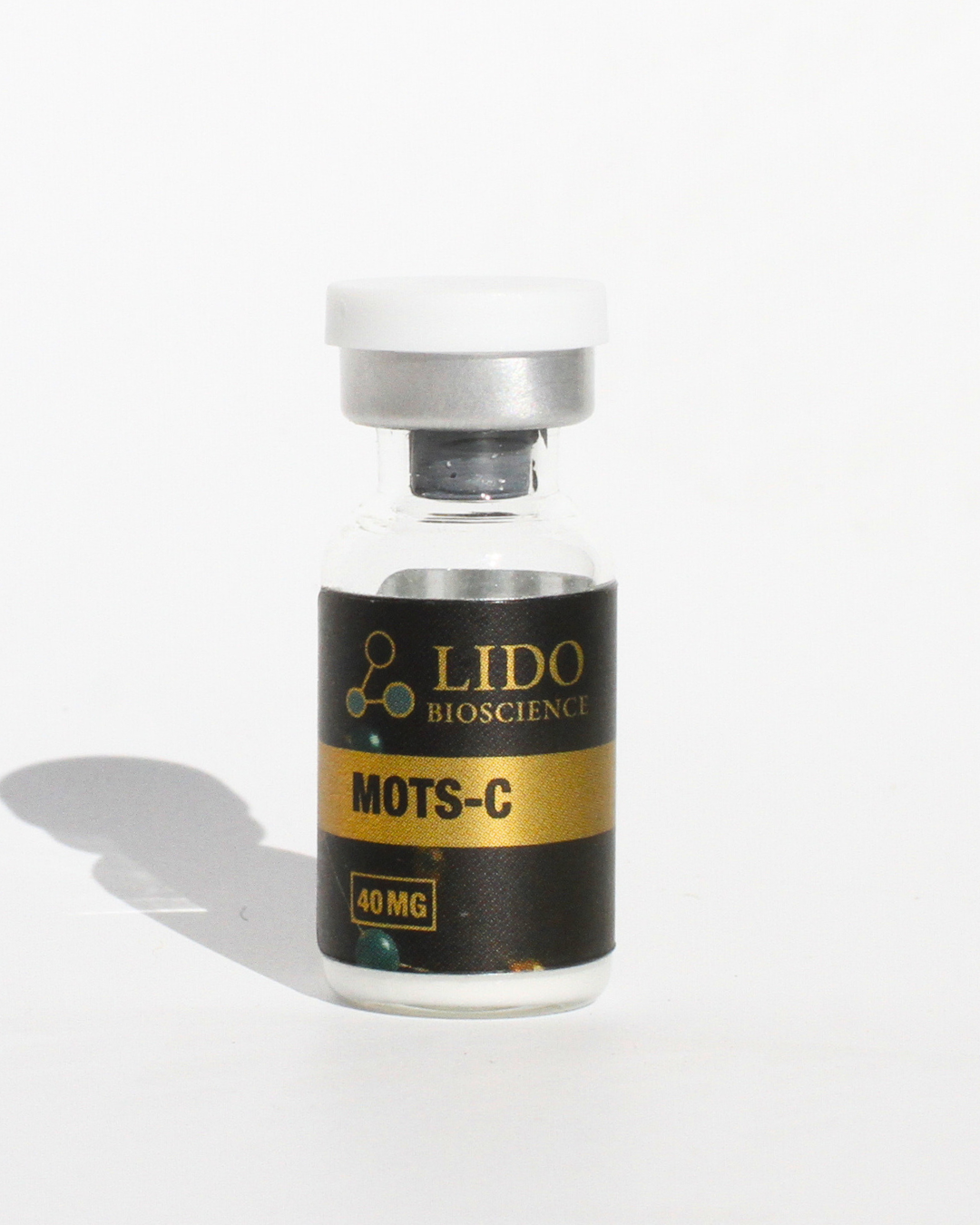
MOTS-c is a small peptide produced inside mitochondria, the energy-generating structures found in nearly every human cell. Researchers have studied it primarily for its ability to switch on AMPK, a cellular sensor that responds to low energy and kicks off a cascade of metabolic adjustments. Because of that role, scientists have wondered whether MOTS-c could help reverse the metabolic damage that obesity causes in various cell types.
A 2026 paper published in Inflammation and Regeneration took that question in a specific direction. The researchers focused on mesenchymal stromal cells, commonly called MSCs, which are stem-like cells found in fat tissue. MSCs are of interest in regenerative medicine because they can migrate to injured tissue and release signals that support repair. The study asked whether treating MSCs from people with obesity with exogenous MOTS-c could restore the repair capacity that obesity appears to diminish.
The short answer the paper arrived at was no, and the reasons why are instructive. MOTS-c did activate the expected metabolic pathway, but it also triggered changes the researchers had not anticipated, raising questions about the relationship between metabolic activation and the broader functional health of these cells.
Why MSCs and obesity are a relevant pairing
Mesenchymal stromal cells drawn from abdominal fat are considered a practical source for cell-based research because they are relatively accessible. In healthy individuals, these cells retain the ability to proliferate, resist cellular aging, and secrete anti-inflammatory molecules. That combination of properties is what gives them potential in regenerative contexts.
Obesity appears to disrupt that profile. The study noted that MSCs isolated from donors with a body mass index at or above 30 showed signs of metabolic compromise compared with MSCs from leaner donors. The researchers observed that basal levels of MOTS-c inside these cells were lower in the obese group, which led to the hypothesis that supplementing MOTS-c from outside the cell might restore normal function.
The research team used cells from six donors in each group and ran both laboratory experiments and a mouse model of kidney injury to test this idea.
MOTS-c and AMPK activation in the lab
When the researchers exposed obese MSCs to exogenous MOTS-c in cell culture, they confirmed that intracellular MOTS-c levels rose and that AMPK signaling was activated. AMPK is often described as a master regulator of energy balance inside cells, so activating it is generally associated with improved metabolic efficiency. On that measure, the treatment appeared to work as expected.
However, several other measurements told a different story. Proliferation, meaning how readily the cells divided and multiplied, decreased in the MOTS-c-treated obese MSCs. This mattered because a cell's ability to proliferate is tied to its capacity to contribute to tissue repair.
The researchers also measured the expression of two genes, p16 and p21, that are associated with cellular senescence. Senescence is a state in which cells stop dividing and begin releasing inflammatory signals. Both markers increased after MOTS-c treatment. In addition, TNF-alpha, a well-known pro-inflammatory molecule, was upregulated. Taken together, these findings suggested that MOTS-c was pushing the obese MSCs toward a more aged, inflammatory state rather than rescuing them.
Results in a living system
To test whether the laboratory findings held up in a more complex biological environment, the team used a mouse model of renal artery stenosis, a condition in which restricted blood flow to the kidney leads to fibrosis and tubular damage. This model is established in MSC research because it provides a clear set of measurable outcomes: kidney perfusion, degree of fibrosis, and the extent of tubular injury.
MSCs that had been pre-treated with MOTS-c before being introduced into the mice with stenotic kidneys did not improve any of these outcomes compared with untreated controls. Renal perfusion did not recover. Fibrosis was not reduced. Tubular injury remained.
Perhaps the most striking finding in this section was that MOTS-c pre-treatment also blunted the reparative performance of MSCs from lean donors. In other words, even cells that started with intact function appeared to lose some of their repair capacity after MOTS-c exposure. This widened the finding beyond the obesity context and pointed to a more general effect of MOTS-c on MSC biology.
The dissociation between metabolism and function
The core conceptual contribution of the paper is what the authors called a dissociation between metabolic activation and functional stemness. These two things are often assumed to travel together: if a cell's metabolism is running better, the expectation is that the cell itself is healthier and more capable. This study provided evidence that is not always the case.
AMPK activation is metabolic activation. But the downstream effects on proliferation, senescence markers, and inflammatory gene expression suggest that switching on this pathway in MSCs under obese conditions, or perhaps in MSCs generally, does not straightforwardly translate to improved repair function.
The researchers described these as context-dependent effects of mitochondrial-derived peptides. That framing is important because it cautions against generalizing findings from one cell type or one physiological context to another. What MOTS-c does in muscle tissue during exercise research, for example, may not predict what it does in fat-derived stromal cells under conditions of metabolic stress.
What the findings do not tell us
It is worth being clear about the limits of this research. The study was conducted with six donors per group, which is a small sample. The in vivo work used a mouse model, which does not fully replicate human physiology. The paper focused on a specific cell type, adipose-derived MSCs, and the conclusions apply most directly to that context.
The findings also do not address what MOTS-c does in other tissues or under other experimental conditions. A large body of earlier literature has documented effects of MOTS-c on skeletal muscle metabolism, insulin sensitivity signaling pathways, and responses to physical stress in animal models. None of those findings are invalidated by this paper. What the paper adds is a note of caution about assuming that metabolic benefits extend uniformly to all cell types and all disease contexts.
Early data from this study also does not settle the question of whether different dosing strategies, timing protocols, or delivery methods might produce different outcomes in MSCs. The researchers used a co-incubation approach in vitro and a pre-treatment approach in vivo. Whether other protocols would shift the balance of effects remains an open question.
Broader significance for peptide research
This paper is a useful example of why mechanistic specificity matters in peptide research. MOTS-c reliably activates a well-characterized signaling pathway. But the downstream consequences of that activation depend on the cellular environment in which it occurs. In the context of obese MSCs, activating AMPK was not sufficient to overcome the dysfunctional state those cells were already in, and may have contributed to worsening it.
The study also raises questions about the relationship between mitochondrial peptide signaling and cellular aging. The increase in senescence markers following MOTS-c treatment is an observation that the literature will likely need to explore further across different cell types and conditions before any broad conclusions can be drawn.
For researchers and readers following the science of mitochondrial-derived peptides, the takeaway from this published abstract is that the picture is more nuanced than a simple metabolic activator story. Context, cell type, and disease state all appear to shape the outcomes in ways that remain to be fully mapped.