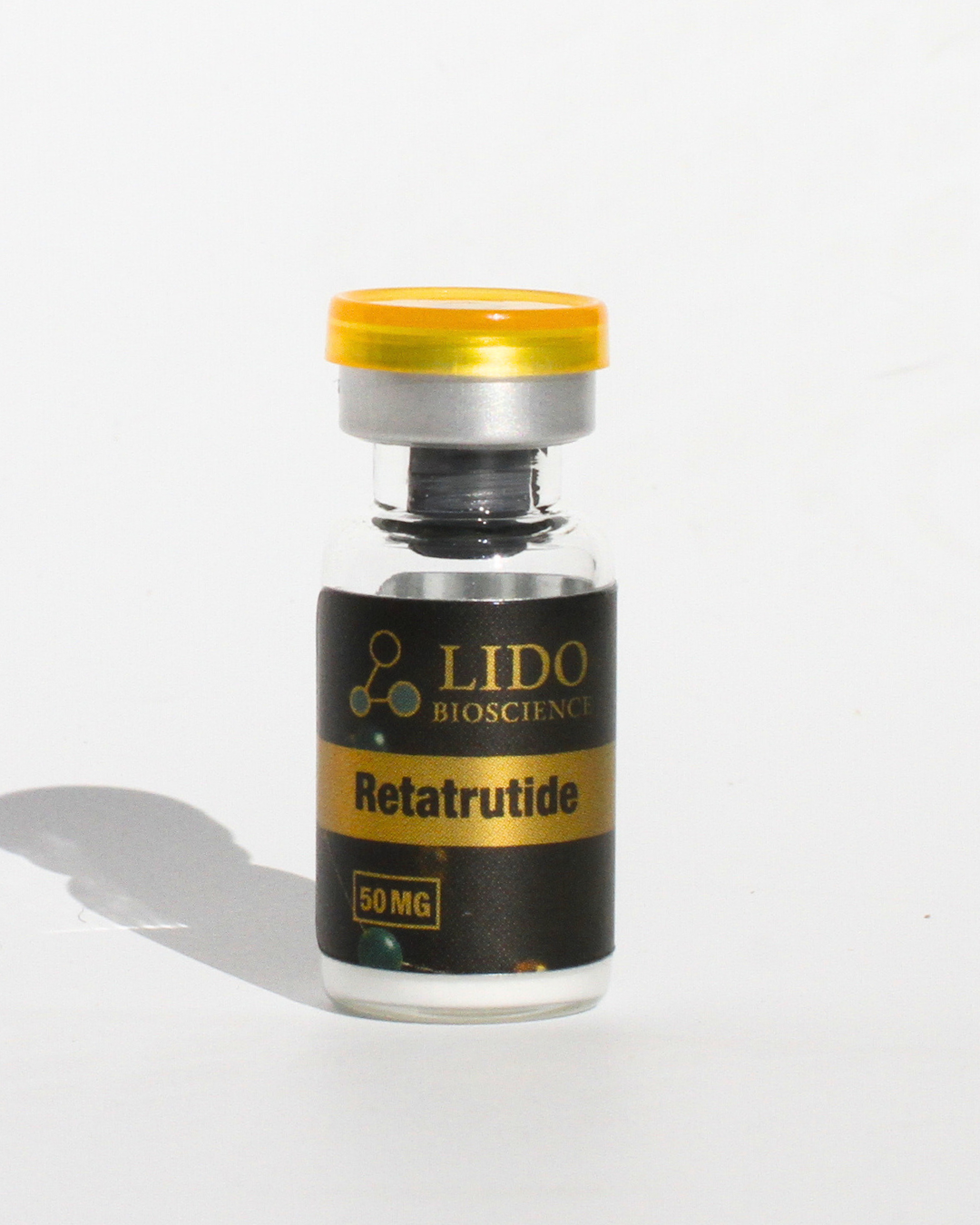
Two injectable peptides that activate the GLP-1 receptor have reshaped how clinicians and researchers think about body-weight regulation. Both work by mimicking gut hormones that signal fullness and slow gastric emptying. Bariatric surgery, which has decades of outcome data behind it, physically reduces stomach volume or reroutes the digestive tract. Until recently, head-to-head comparisons between the two approaches relied mostly on short-duration clinical trials with tightly controlled populations, not the messier reality of everyday clinical care.
A retrospective study published in a peer-reviewed obesity journal changed that. Researchers examined records from two urban health systems covering the years 2018 to 2024. They identified more than 44,000 adults with a body-mass index of 35 or higher who had received either one of the two injectable GLP-1 receptor agonist peptides or one of two bariatric procedures, sleeve gastrectomy or gastric bypass. The goal was straightforward: track total weight loss at one, two, and three years and compare the numbers with statistical controls for the differences between patient groups.
The findings offer one of the clearest real-world snapshots yet of where these peptides stand relative to surgery, and they also reveal meaningful differences between the two peptides themselves.
Study design and patient population
The research team used a method called inverse probability weighting to adjust for the fact that patients who choose surgery versus those who choose a peptide injection are not identical groups. People receiving surgery tended to differ in baseline health characteristics, and without statistical correction those differences could make one approach look better or worse than it really is.
Two analyses were run. The first, called intention-to-treat, included everyone who received at least one order for a GLP-1 receptor agonist, whether or not they stayed on it. The second, called per-protocol, kept only patients who had at least one continuous year of orders for the peptide. That second analysis was designed to answer a more specific question: what happens when someone actually sticks with the treatment?
Weight loss numbers at each time point
The published abstract reports total weight loss as a percentage of starting body weight. For semaglutide under the intention-to-treat analysis, the figures were 5.4 percent at one year, 6.5 percent at two years, and 7.4 percent at three years. Tirzepatide, a dual-receptor peptide that activates both GLP-1 and GIP pathways, performed better in this comparison: 9.1 percent at one year and 10.8 percent at two years. Three-year tirzepatide data were not yet available in the dataset.
Sleeve gastrectomy produced 24.4 percent total weight loss at one year, 22.4 percent at two years, and 22.0 percent at three years. Gastric bypass numbers were higher still: 29.8 percent, 28.1 percent, and 28.4 percent at the same intervals. Both surgical figures were substantially larger than either peptide under the intention-to-treat framing.
When the researchers narrowed to the per-protocol group, the peptide numbers improved noticeably. Semaglutide users who remained on treatment for at least a year reached 7.2 percent at one year, 8.0 percent at two years, and 8.8 percent at three years. Tirzepatide reached 11.7 percent at one year and 11.9 percent at two years. The improvement from intention-to-treat to per-protocol is consistent with the well-known fact that discontinuation blunts real-world outcomes for any ongoing pharmacological intervention.
The gap between peptides and surgery
Even under the most favorable per-protocol conditions, neither peptide closed the gap with surgery in this dataset. Gastric bypass was associated with roughly two and a half times the weight loss of tirzepatide at the one-year mark and more than three times the loss seen with semaglutide. Sleeve gastrectomy showed a similar pattern, though the ratio was somewhat smaller.
Researchers are careful to note this is a retrospective, two-center study, meaning the conclusions apply directly only to those patient populations. Selection factors, dosing patterns, access to follow-up care, and other unmeasured variables could all influence outcomes. The study cannot account for everything that differs between a person who pursues surgery and one who uses a peptide.
Still, the scale of the difference is large enough that researchers and clinicians have described these results as clinically meaningful, not just statistically significant. A gap of fifteen to twenty percentage points in total weight loss is not a rounding error.
Tirzepatide versus semaglutide
One of the study's secondary findings is the consistent separation between the two peptides. Tirzepatide showed roughly four to five percentage points more total weight loss than semaglutide at every time point where both were measured, under both the intention-to-treat and per-protocol analyses.
The mechanistic explanation the literature points to is tirzepatide's dual action. It activates GIP receptors in addition to GLP-1 receptors. GIP, or glucose-dependent insulinotropic polypeptide, has its own role in energy metabolism and fat storage. Early data points at synergistic effects when both pathways are engaged simultaneously, which may explain why dual-agonism produces larger body-weight changes than GLP-1 activation alone.
Whether that advantage translates into other metabolic outcomes at three years or beyond is a question the present dataset cannot fully answer, given that tirzepatide was approved later and therefore has a shorter follow-up window in real-world records.
Discontinuation as a hidden variable
The difference between the intention-to-treat and per-protocol results points to something researchers studying peptide-based interventions have noted repeatedly: a significant portion of patients in real-world settings stop treatment before a year is complete. The reasons are varied, including cost, side effects, supply constraints, and patient preference, and they are not equally distributed across populations.
When researchers filtered for continuous use, outcomes improved by one to two percentage points for semaglutide and by about two to three points for tirzepatide. That improvement is real, but it does not fully close the gap with surgery. It does suggest, however, that adherence is one of the modifiable variables in the equation, which is relevant both for how researchers design future studies and for how clinicians counsel patients about realistic expectations.
What this data adds to the research picture
Previous comparisons between GLP-1 peptides and bariatric surgery often relied on randomized trials with narrow eligibility criteria and short follow-up periods, or on smaller retrospective cohorts. The size of this study, more than 44,000 patients tracked for up to three years, makes it one of the largest real-world comparisons to date.
The literature now contains a clearer signal: among patients who are eligible for both options, bariatric surgery is associated with greater sustained weight loss in the years immediately following treatment. At the same time, the peptide approach is non-surgical, reversible, and increasingly accessible, which matters to researchers modeling population-level health trends and to clinicians thinking about patient preferences.
Future studies will likely try to capture outcomes beyond total weight loss, including cardiovascular events, metabolic markers, and quality-of-life data, to give a fuller picture of how the two approaches compare over a longer horizon. For now, this study fills a meaningful gap by putting real-world numbers on a question that has been mostly theoretical until recently.