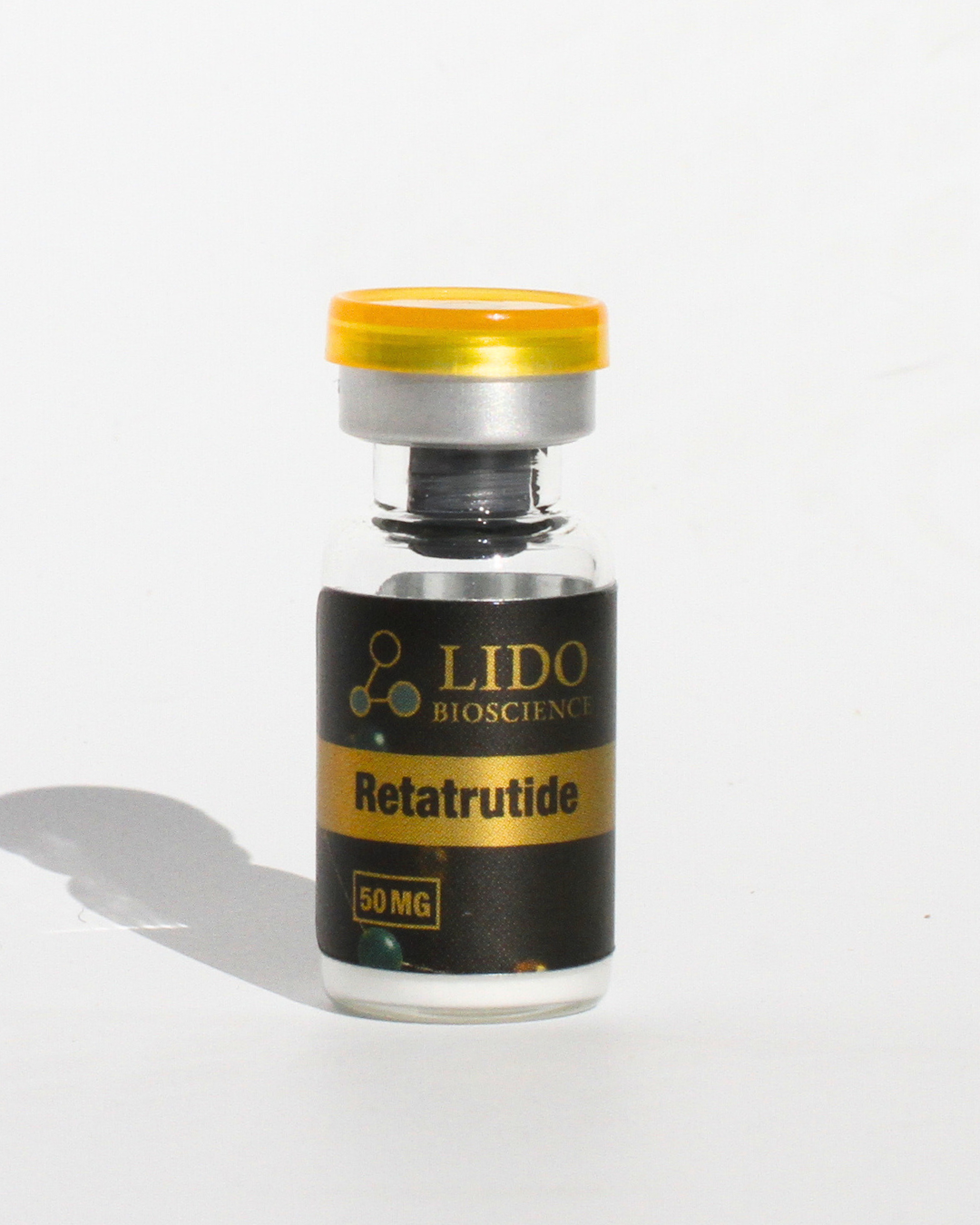
Glucagon-like peptide-1 receptor agonists, a class of peptides that interact with a receptor found throughout the gut and brain, have drawn significant research attention over the past decade. Most of that attention has focused on blood sugar regulation and body weight. But because the GLP-1 receptor is also expressed in gastrointestinal tissue, researchers have begun asking a more specific question: could these peptides influence the course of inflammatory bowel diseases like Crohn's disease and ulcerative colitis?
A recent target trial emulation, published in a major clinical gastroenterology journal, tried to answer that question using real-world insurance claims data. The researchers looked at more than two thousand patients with stable inflammatory bowel disease who also had obesity and/or diabetes, then compared those who started a GLP-1 receptor agonist peptide against those who did not. The results were more sobering than many in the field may have hoped.
Study design and patient groups
The research team used an administrative claims database covering the years 2018 through 2023. Rather than running a prospective randomized trial, they performed what is called a target trial emulation: a method that uses observational data to mimic the structure of a clinical trial as closely as possible. This approach can reveal real-world patterns at a scale and speed that a fully controlled trial cannot always match.
Eligible patients had to be in a stable phase of their IBD. That meant no steroid use, no IBD-related hospitalization or surgery, and a steady medication dose for at least six months before the observation period began. The researchers then divided participants into two cohorts based on the type of IBD therapy they were already receiving.
Cohort one included patients on a mild anti-inflammatory drug called 5-aminosalicylic acid, or no IBD-directed medication at all. This cohort ended up with 2,028 patients who started a GLP-1 receptor agonist, matched one-to-one with 2,028 patients who did not. Cohort two included patients on more intensive regimens, specifically advanced biologic therapies and/or immunomodulators. This group was smaller, with 346 matched pairs. Each matched pair was followed for one year.
Primary outcome measured
The main thing the researchers tracked was relapse, defined as a composite endpoint: IBD-related hospitalization, surgery, or the use of prednisone (an oral steroid often prescribed when IBD flares). This composite gives a practical snapshot of disease activity over a twelve-month window.
In cohort one, the one-year relapse rate was 7.9 percent in the GLP-1 receptor agonist group and 7.9 percent in the non-initiator group. The relative risk was essentially 1.0, meaning no detectable difference between the two groups. In cohort two, the rates were 12.4 percent versus 15.6 percent, a numeric gap that looks promising but came with a wide confidence interval ranging from 0.55 to 1.15. Because that interval crosses 1.0, statisticians would not call the difference significant. The literature therefore does not support concluding that adding these peptides improved IBD control in either group.
Safety signals reviewed
Beyond effectiveness, the team also examined safety outcomes over the same one-year period. In cohort one, the rates of adverse safety events were 7.0 percent for GLP-1 receptor agonist initiators versus 7.9 percent for non-initiators, a relative risk of 0.88 with a confidence interval that again crossed 1.0. Cohort two showed similar proportions: 5.5 percent versus 6.6 percent, with a very wide confidence interval.
In plain terms, starting a GLP-1 receptor agonist peptide alongside existing IBD therapy did not appear to create new safety problems in this data set. But neither group showed a statistically meaningful safety advantage. The researchers characterized the safety profile as broadly comparable between initiators and non-initiators across both cohorts.
Discontinuation rates
One finding that researchers noted was the dropout rate. Within the first year, 36 percent of patients in cohort one stopped taking their GLP-1 receptor agonist. In cohort two, about 33 percent discontinued. These figures are meaningful because a large fraction of participants effectively reduced their exposure to the peptide mid-study. High discontinuation rates are common in real-world observational data for this class of compound, and they can complicate interpretation. If many participants stopped early, any potential biological effect on gut inflammation might not have had time to manifest.
The study did not break down the specific reasons for stopping, but in general, GLP-1 receptor agonist discontinuation in observational data is linked to a mix of side effects, cost, and access issues. These practical factors are part of why real-world outcomes sometimes diverge from mechanistic predictions.
Why the gut connection was worth studying
The scientific rationale behind this study was not arbitrary. GLP-1 receptors are expressed in the intestinal lining and on certain immune cells, which has led some researchers to hypothesize that activating these receptors might dampen local inflammation. Animal model data and smaller human studies had previously hinted at anti-inflammatory effects in gut tissue. That background evidence was enough to justify a large observational investigation.
The target trial emulation found that, at least in patients with stable IBD who also have metabolic comorbidities, adding these peptides on top of existing therapy did not translate to fewer relapses or hospitalizations over twelve months. Early signals in preclinical or small-scale work do not always carry over into larger real-world datasets, and this study is a clear example of that gap.
Researchers note that the question is not fully closed. The patients enrolled were already stable, which may have limited the observable room for improvement. Studies in patients with active disease, or with longer follow-up periods, might reveal different patterns. But as the evidence stands today, the literature does not support GLP-1 receptor agonist use as an adjunctive strategy specifically for improving IBD disease control.
Context for peptide research broadly
This study is a useful reminder of how research on peptide mechanisms moves through layers of evidence. A molecule might have a biologically plausible mechanism in one organ system while showing no clinical signal in a large real-world dataset examining a different condition. GLP-1 receptor agonist peptides remain an area of active investigation across several fields, from metabolic health to cardiovascular research, and each new study adds a piece to that picture.
For anyone following the science around gut-active peptides or metabolic compounds, the takeaway from this particular trial emulation is straightforward: in a large, well-matched patient population, adjunctive GLP-1 receptor agonist use did not change one-year IBD outcomes in either direction. The safety profile looked comparable to non-use, and high discontinuation rates in the real-world setting complicated the interpretation further. Future prospective trials with tighter controls may yet yield different conclusions.