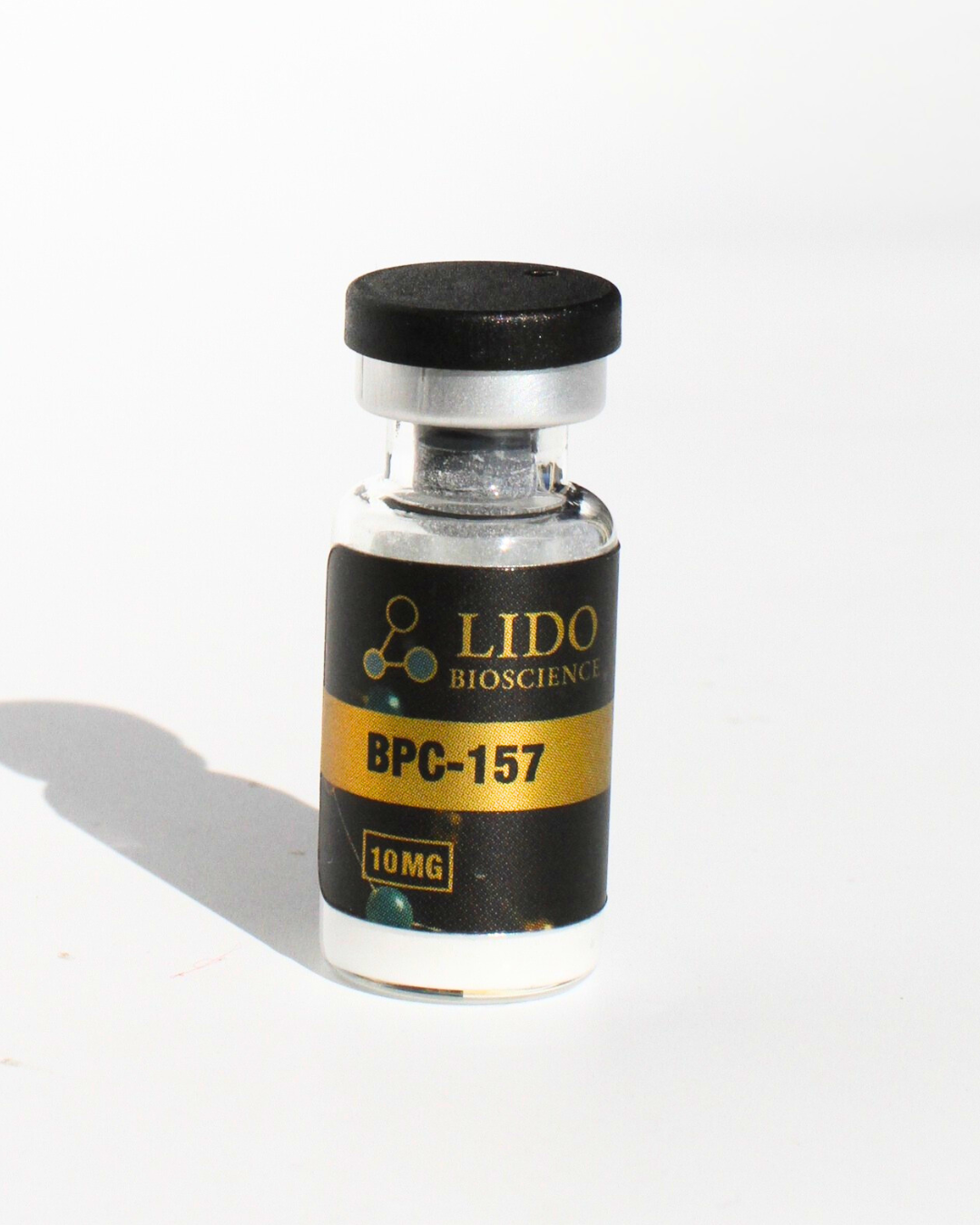
BPC-157 is a synthetic peptide made up of fifteen amino acids. Its sequence is derived from a fragment of a protein found in gastric juice, and researchers have been studying it in laboratory and animal settings for more than thirty years. That body of preclinical work is unusually large for a compound that has never reached a completed Phase 2 clinical trial, and a 2026 narrative review published in Pharmaceutics set out to explain the gap.
The review, authored by Mateescu Diana-Maria and colleagues, draws on searches across PubMed, Embase, the Cochrane Library, and international patent databases. Its conclusion is pointed: the obstacle to clinical advancement is not a lack of observed biological activity in preclinical models. The obstacle is a lack of basic pharmaceutical science. No validated formulation exists, no approved dosing regimen has been established, and the human pharmacokinetic profile remains critically incomplete.
For anyone curious about what separates an interesting research compound from a drug that can be properly tested in people, the review offers a useful case study. The problems it identifies are not unique to this peptide, but they are unusually well documented here.
What BPC-157 is and why researchers study it
BPC-157 stands for body protection compound 157. It is a pentadecapeptide, meaning a chain of exactly fifteen amino acids, with the sequence GEPPPGKPADDAGLV. Researchers synthesize it in the laboratory; it does not occur in this exact form in the human body, though its sequence is borrowed from a naturally occurring gastric protein fragment.
Preclinical studies have reported cytoprotective and regenerative signals across multiple organ systems in animal models. The range of systems studied is broad, which is part of what makes the compound scientifically interesting and part of what makes rigorous development complicated. A compound that appears to do many things in animal models requires careful, systematic work to understand which effects are real, which are artifacts of study design, and which might translate to humans.
The review notes that the preclinical data, while extensive, was not gathered under the kind of standardized pharmaceutical conditions that regulators require before a human trial can proceed. Most studies used research-grade material without formal characterization of the preparation used.
The short half-life problem
One of the most practically significant findings discussed in the review involves the peptide's plasma half-life. A formal preclinical ADME study conducted in two animal species confirmed that BPC-157 clears from plasma in under thirty minutes. A small preliminary human pilot involving two subjects produced a similar finding.
Half-life matters enormously for drug development because it governs how often a compound needs to be administered to maintain a meaningful concentration in the body. A sub-thirty-minute half-life is quite short. It means the peptide is processed and eliminated quickly.
What makes this particularly puzzling from a scientific standpoint is that animal studies have reported biological effects lasting hours to days after a single dose, well beyond the window when the peptide could plausibly still be present in measurable concentrations. The review calls this a pharmacokinetic-pharmacodynamic disconnect, meaning the relationship between blood levels and observed effects does not follow a straightforward pattern. Understanding why that disconnect exists, and whether it would replicate in humans, is one of the questions that proper clinical pharmacology would need to answer before rational dosing is possible.
Bioavailability across routes of administration
The review examines what is known about how BPC-157 behaves depending on how it is administered. Preclinical ADME data show intramuscular bioavailability ranging from roughly 14 to 51 percent depending on species, which is a wide range and reflects how much uncertainty remains in translating animal data to humans.
One genuinely unusual characteristic noted in the review is the peptide's stability in gastric juice. Most peptides are broken down rapidly in the acidic, enzyme-rich environment of the stomach, which is why oral administration is often ruled out early in peptide drug development. BPC-157 appears to resist that degradation to a degree that is atypical for its class. Animal studies have reported biological activity after oral dosing, which is scientifically notable.
However, the review is careful to point out that oral stability in gastric juice is only one piece of the absorption puzzle. The peptide has not been classified under the Biopharmaceutics Classification System, a standard framework used to predict how drugs are absorbed. Intestinal permeability has not been formally characterized. Excipient compatibility, meaning how the peptide interacts with the inactive ingredients used in a real formulation, has not been studied. Without that data, no pharmaceutical-grade oral, injectable, or topical formulation can be properly designed or validated.
The thin clinical evidence base
The review found that all available clinical data on BPC-157 come from fewer than thirty human subjects combined, spread across three pilot studies. None of those studies used standardized pharmaceutical preparations. None were controlled trials. No Phase 2 clinical trial has been completed.
For context, a Phase 2 trial is typically the stage at which researchers begin to assess whether a compound produces meaningful effects in a defined patient population, using a validated formulation and a dosing regimen grounded in pharmacokinetic data. BPC-157 has not yet reached that stage after thirty-plus years of preclinical work.
The review also notes that BPC-157 appears on the World Anti-Doping Agency's monitoring list, which reflects both the research interest in the compound and the regulatory uncertainty surrounding it. It does not have approved status from the FDA or the European Medicines Agency.
What pharmaceutical development would actually require
The review is explicit about what needs to happen before a legitimate clinical program could proceed. The list is substantial but not unusual for any peptide therapeutic at an early stage of development.
First, a pharmaceutical-grade formulation would need to be developed and validated for a specific route of administration. That means characterizing how the peptide interacts with excipients, how it behaves under storage conditions, and how it can be reliably manufactured to a consistent standard. Second, formal pharmacokinetic studies in humans would be needed to establish how the compound is absorbed, distributed, metabolized, and excreted. The two-subject pilot referenced in the review is not sufficient for that purpose. Third, a coherent pharmacodynamic hypothesis would need to be established, meaning researchers would need to define what biological signal they are targeting in humans, how to measure it, and what dose would be expected to produce it given the short half-life.
The review frames this not as a critique of the preclinical science but as a description of the standard pathway any investigational compound must travel. The authors describe BPC-157 as pharmaceutically underdeveloped rather than biologically uninteresting. The distinction matters. It means the path forward is defined, even if it is long.
Implications for research use and future studies
For researchers and curious readers following the BPC-157 literature, the Pharmaceutics review offers a useful framework for interpreting the existing data. The preclinical record is real and the breadth of systems studied is genuinely unusual. At the same time, the absence of controlled human trials, validated formulations, and complete pharmacokinetic characterization means that translating animal findings directly to human expectations is premature.
The short plasma half-life combined with unexplained prolonged effects is one of the more scientifically interesting open questions. It may indicate an indirect mechanism of action, such as triggering a downstream pathway that outlasts the peptide itself, or it may reflect limitations in how preclinical studies were designed. Resolving that question would require exactly the kind of rigorous human pharmacokinetic and pharmacodynamic work the review calls for.
Early data from the preclinical literature points at real biological signals worth investigating. What the field currently lacks is the pharmaceutical infrastructure to investigate them properly. The review concludes that addressing the biopharmaceutical gaps is not optional but is a prerequisite for any meaningful clinical program to move forward.